Showing posts with label real estate. Show all posts

Thursday, June 23, 2011

Homes need carbon monoxide detectors by July 1

Customers walk by a display of carbon monoxide detectors in a Home Depot store in San Diego.
Customers walk by a display of carbon monoxide detectors in a Home Depot store in San Diego. — Howard Lipin / U-T Photo
A new law requires single-family homeowners to install carbon monoxide detectors in their home by July 1. 


Buying a monitor
Prices for the monitors vary because of the different models and features. Some devices are battery operated and others are hardwired. Others feature a voice alarm or are a combination of smoke and carbon monoxide detector. The state fire marshal’s office has a list of approved devices and installation requirements on its website at http://osfm.fire.ca.gov/

What is carbon monoxide
Carbon is an oderless, colorless gas that is produced from furnaces, fireplaces, common household appliances, vehicles and other devices that burn fuels including propane, natural gas and oil.

Symptoms of poisoning
Headache, dizziness, loss of consciousness, nausea, weakness, chest pain and vomiting. (For tips on preventing poisoning go to www.fire.ca.gov)

Homeowners in California have less than two weeks to get a carbon monoxide detector installed in their homes.  A new state law that goes into effect July 1 requires the devices to be installed in all single-family homes that have an attached garage, fireplace or a fosil-burning heater. The detectors of the odorless, colorless gas can be bought at hardware stores for anywhere from $20 to $90. The bill requires that devices sold are certified by the Office of State Fire Marshal.


The State Air Resources Board, a regulatory board at the California Environmental Protection Agency, estimates that carbon-monoxide poisoning causes 30 to 40 deaths every year in California. The board said inhalation of the gas has led to about 175 to 700 emergency room and hospital visits within the last three years in California. But not everyone has to install the detectors by July 1. Owners of other dwellings, such as hotels, apartments and dormitories, have until 2013 to comply. Homeowners who fail to install the devices by July 1 will receive a 30-day notice. If they fail to comply, they face a maximum fine of $200 for each offense.

Tonya Hoover, acting State Fire Marshall, said it will be difficult to enforce the law but that the focus should be in increasing awareness. “It will be challenging because they are a lot more homes than people able to verify,” Hoover said. “That’s why one should focus on education and outreach, informing people about the law and how to install the devices properly.”

California joins 24 other states, including New York, Florida, Illinois and Texas, in its effort to curb carbon-monoxide poisoning by mandating the use of detectors.

Jim Miguel, who owns several homes in Ocean Beach, Clairemont and Point Loma, said he has already installed carbon monoxide detectors in each of his homes. He says the detectors should not be mandated by the state. “I am for personal freedom of choice,” Miguel said. “It’s a smart choice to install detectors, but consumers should decide on their own.” Logan Heights resident Rebecca Gullans supports the law. Gullans said installing such a device is prudent because she has small children. But she’s concerned low-income families may not be able to afford the devices. “It seems like something they should subsidize,” Gullans said. Part-time county resident Loretta Alley, who owns three properties in Sun City Lincoln Hills near Sacramento, says the law is a great idea. “It’s the same as with smoke detectors, people resist it at first but look at how many lives it safes,” Alley said.

Wednesday, June 22, 2011 at 12:07 p.m

Homes need carbon monoxide detectors by July 1 - SignOnSanDiego.com

Wednesday, April 27, 2011

LEASED - Mission Hills Buiness Zoned $2,800

Mission Hills Rental 92103

Tuesday, February 8, 2011

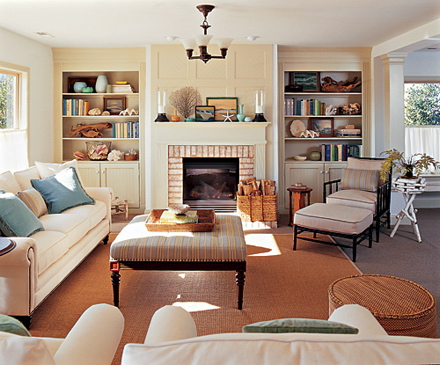
Staging for The Five Senses

Today's sellers are on the hunt for creative ways to ramp up their marketing. It is a necessity in today's tough market to have several tricks up your sleeve. 

The idea is nothing new, but more and more sellers are beginning to discover the power of "staging."

In today's article, we will focus on staging for the five senses. Human beings are a sensory species. Our judgment and emotions are strongly influenced by what our senses tell us.

To harness the full power of staging, it's time you covered the basics.
 

1. Sight: This one is pretty obvious! Your rooms should be tidy and uncluttered. Photos, trophies, and kids' artwork should be replaced with simple, classic decor. A buyer needs to be able to imagine their own life in your home. If your budget allows, you may want to temporarily store outdated and oversized furniture. Rent new, modern pieces to create a simple and clean design.

For tighter budgets, slipcovers are an inexpensive way to neutralize loud patterns and to deter attention from stained and damaged furniture.


2. Smell: Be sure that each room is not only tidy, but that it smells clean. However, avoid harsh chemical smells, such as bleach. Many buyers may be sensitive to these smells and will want to make a quick exit. Consider installing simple room air fresheners or candles (when supervised) to create ambiance.

Pet owners and smokers may have their work cut out for them. Smoke can infiltrate furniture, carpets, and even walls. And with many buyers suffering from allergies, you may need to send Lassie to doggy day care for the day. To remove odors, clean carpets and repaint walls.

3. Touch: Broken and chipped tile, missing and loose handles, and wobbly handrails are all red flags to a would-be buyer. Be sure that you do any minor repairs before showing your home.


4. Hearing: An open house can be an event. For large-scale estates, they may even include musical performances. But for smaller sales, and that is most of us, simply be sure that barking dogs are taken to doggy daycare. Have noisy equipment shut off. Don't leave on televisions or radios. Peace and quiet is a sound, too!

5. Taste: Okay, this can be a hard one, depending on what kind of showing you are having. Open houses, though, are a great forum to provide wonderful food and drink. Many agents set up open houses much like a party. Be sure to have enough finger foods (that aren't messy) for all of your guests. And even small showings can play up the sense of taste by having freshly baked cookies or other goodies filling the air.


The bottom line? Staging is intended to create an atmosphere for the prospective buyer where they can envision themselves in your home. You create a lifestyle with your staging, and through how you stimulate the senses.

Is your home most likely to be bought by a large family? Do you have a downtown condo that will appeal to young professionals? When staging is done right, buyers will pay top dollar for not only your home, but the lifestyle it will afford them.

Staging done right creates ambiance, showcases the highlights of your home, and appeals to a wide range of buyers ... all sure fire ways to make a deal!


by Carla Hill

Link to original article.

Wednesday, February 2, 2011

How Much Home Can I Afford?


Buyers Advice - Housing Affordability

How Home prices skyrocketed in the early 2000's, with things really heating up between 2005 and 2007. According to the New York Times, HUD conducted a survey in 2007, finding that home values had risen 16 percent in just those two years. The housing bubble burst in the Spring of 2007 and markets tanked.
Now house values are resetting, with some areas still experiencing declines. In high boom areas, such as Florida, Arizona, and California, homes are having to correct from staggering rises of 20, 30 and even 40 percent in home values. This means values rose, and millions of homeowners bought at the top of the market, now finding themselves upside down in their loans.

Despite the crisis, there are still buyers on the market. But many are wary to make a mistake of buying a home they can't pay for. How much home can you really afford? Home affordability, in general, is dependant on a range of factors. These include:

Employment status: Do you have a stable job and income? Lenders will want to know if they can rely on you to make monthly payments for many years to come. With an unemployment rate near 10 percent, it's no wonder a record number of homes are currently in foreclosure. Another way lenders assess your risk is by examining your credit score.

Credit Score: Over your adult life you have been building up a credit score. Every card and loan you have opened has figured into a 3 digit number from 300 - 850. The higher your number, the less "risk" you are perceived to be, and thus, the more likely you'll be extended higher sums of credit for a lower rate. Car loans, student loans, home loans, credit cards, and personal loans. How faithfully you've repaid them, and how many of them you have open, dictates your score.

Number of Dependants: Do you have children or aging parents for whom you are financially responsible? If so, consider medical bills, schools tuition, and daycare when calculating a reasonable budget.

Desired Location: A 2,000 square foot home in rural Nebraska costs dramatically less than the same 2,000 square foot home in the heart of New York City. Prices even range widely by suburb and neighborhood.

Savings: You will need money for a downpayment. Financial Expert Suze Orman recommends you put at least 20 percent down. That means on a $200,000 house, for example, you should have $40,000 in cash to put down. You will also need additional cash for closing costs, as well as repairs and maintenance that are inevitable with homeownership.

Emergency Fund: Do you have a separate savings account worth 8 months of bills? You must have an emergency fund. Just ask the 15 million unemployed. Things do and will happen. If you don't have this fund, you can't afford a house. You may be able to "borrow" money for a house ... but in reality you really can't afford one.

Interest Rates: Interest rates are at historical lows. At this writing, the 30-year fixed rate mortgage is 4.74 percent. To put this in perspective, rates in the 1980's were anywhere from 13 to 18 percent. This means big savings if you are in the position to buy.

Monthly Payments: If you have ever bought a car, one of the first things a salesman will ask you is, "Where do you want your monthly payment to be?" It's all about rates and downpayments with lenders. Yes, it is important that your monthly mortgage payment is no more than 1/3 of your monthly income, but don't be coaxed into buying a home you can't really afford just because the monthly payments are appealing (hello, subprime mortgage crisis).

Now, all that said, this next idea may seem a bit radical for some of you. There is a movement among some Americans to not only reduce their debt, but to get completely out from under it. This translates implicitly into the home buying process.

We have become a nation increasingly driven by the bigger and better. Need we say more than "McMansions." It is a culture of debt, where even the national government owes $14 trillion. And no, not every country has national debt. The United States, though, leads the way.

So, what if you could buy a much smaller house, or a house in a much less prominent neighborhood, and avoid a mortgage payment altogether?

The idea is nearly unheard of in this country. But it could be one that will begin to gain ground as many families struggle to makes ends meet, and even more families learn the hard lesson about home affordability. The truth of the matter is this. If you are paying a mortgage, you do not own your home. It doesn't matter if you've paid on a loan for 1 year or 29, if you default, the home is property of the bank.

"But what about Joe Smith, who works in the same office and makes $150,000 a year. He just bought that $500,000 house. I should have that same standard of living." This is what is partially responsible for the bubble we saw in the last decade. Keeping up with the Jones.

Consider for a moment what it is in your life that is really important. No doubt you will quickly pull to mind your family and closest friends. You may think about a full refrigerator, a safe city, and a clean bill of health. These are things found in small homes, the same as large.

Success is not measured by the size of house you own. So, if you are in the market to become a homeowner, be sure to consider what it could mean to buy truly within your means. Does it mean saving for a few more years and then buying a fixer upper? Does it mean the smaller house in the less prestigious neighborhood is in your budget?

In recent years, "What can I afford?" has turned into "How much monthly payment can I afford?" or "How much credit am I approved for?" These do not equate with affordability. Perhaps it is time to think long and hard about what kind of home is appropriate for you and your family. You may find that travertine and granite can be forgone for a nice kitchen table and family meals.

By Carla Hill

 Click here for the article

Monday, January 24, 2011

FYI, Things Happening in Real Estate Today


  • Come join the Coronado Real Estate Association, Inc. at the Winn room at the Coronado Public Library and enjoy a FREE seminar presented by the principals behind "Flip This House!"
  • We hope to see you there. Arrive early, public parking only.
  • This event is planned to start at 9:00 am on Feb 24, 2011... at Coronado Public Library - Winn Room in Coronado, CA.

Saturday, January 22, 2011

5156 BENTON CT. HOUSEWARMING PARTY

My sale at 5156 Benton Ct. (92116) recently closed escrow. I co-hosted a house warming party with Barb Retsky from West Coast Mortgage for my buyer to celebrate and meet their new neighbors. The home and yard were filled with warmth and friendships both old and new. Below are some pictures showing the yummy and fabulous the food. What a great event, over 75 people showed up!
If you'd like to receive current market information contact me at (619) 520-8679 or email GREGG@GREGGHIDDLESON.COM WWW.GREGGHIDDLESON.COM
For home mortgage services contact Barbara Retsky (NMLO#302979) at West Coast Mortgage (619) 980-9200 cell or email BARBARA@WESTCOASTMORTGAGE.BIZ

Friday, January 21, 2011